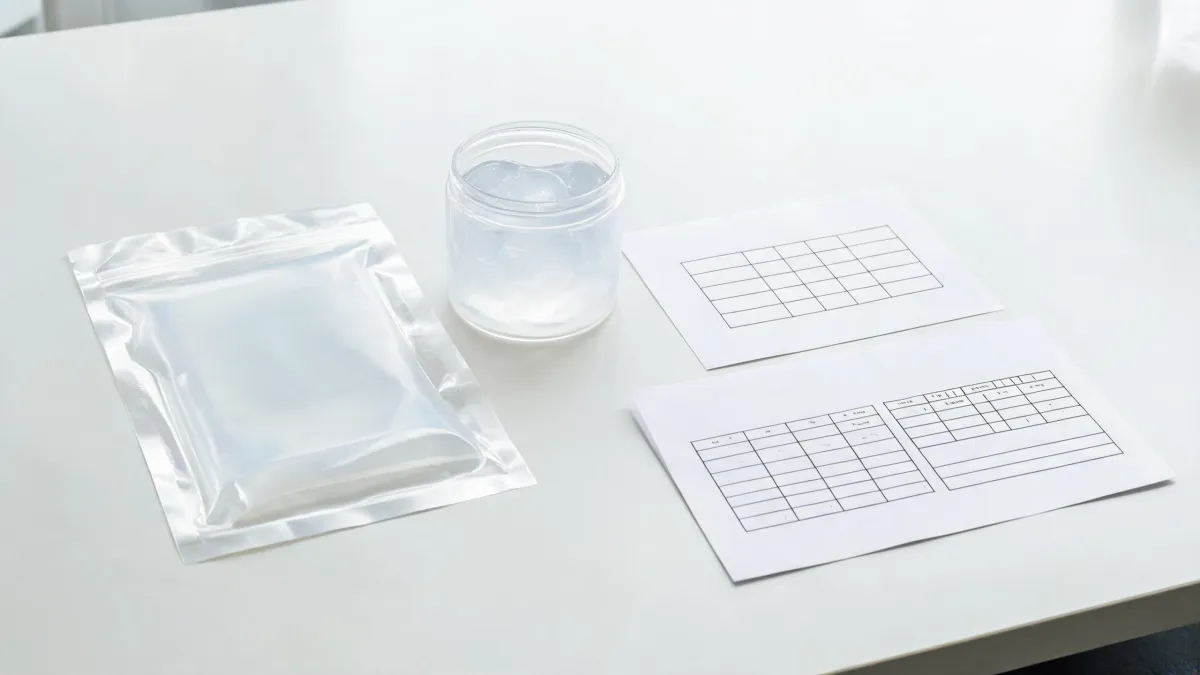
A sealed, unopened single-dose pack of INTRASITE Gel is a buying candidate only when the storage conditions on its own instructions can be shown: dry, 5–25°C, out of sunlight. The exception in the same document cuts harder than the reassurance — if the pack has been opened, or is damaged, the contents do not get used, however sterile that pack was when it was supplied. This piece stays inside one scope: INTRASITE Gel and the 03/2020 European English instructions for use. It is not a statement about other hydrogels, other pack sizes, or the version sitting in a US warehouse at the moment you read it.
I keep a copy of that document open on the receiving bench, because the arguments I get into about a returned pack are almost never about sterility. They are about where the carton sat between the dock and the shelf. The sterile word is the one buyers quote back to me; the storage line is the one they have to go looking for. Three sentences in that sheet carry the whole purchasing decision, and two of them are about the pack rather than the gel.
What the INTRASITE Gel IFU Actually Covers
The sheet says the product is presented sterile in a single dose dispenser pack for ease of application. Read that as a description of how the pack is supplied and presented, not a promise that survives whatever happens to it afterwards. The second line is a prohibition with a condition attached: do not use contents if pack is opened or damaged. Look at what the condition is about — the pack. Not the date code, not the appearance of the gel, not the carton. The third line sets storage: store in a dry place at 5–25°C, and keep away from sunlight.
Three sentences, three jobs. One says how it is presented, one says when to stop, one says where it should have been kept. There is no fourth sentence about re-use, about topping a pack up, or about stretching a single dose across two applications. For a buyer that is the entire documentary basis, and all of it is bound to this product and this version of the sheet.
Why 5–25°C Storage Outweighs the Sterile Claim
Sterile records a state at the point the pack was presented: the word describes the pack as supplied, not a promise that survives whatever happens to it afterwards. The storage line describes a condition that has to keep being true through a truck, a loading dock, a stockroom and a shelf. Only one of those two can go wrong after the pack leaves the factory.
When a pallet arrives, the first thing I check is whether the carton has been anywhere hot, not whether the label reads sterile. Imagine a pack with an unbroken seal that spent a weekend in a metal container in direct sun; nothing about a good seal corrects that. The three parts of the storage instruction belong together because they describe one thing — the environment the pack lives in. Dry is about moisture around the pack, sunlight is about heat and light hitting it, and the temperature range is the part a supplier can actually produce records for.
Telling an Intact Pack From a Damaged One
Because the rejection rule is about the pack, the inspection is about the pack. I look at the seal line first, all the way round, since a partial lift at one corner is the failure I have found most often on gel packs that shipped in a mixed carton. Then the body of the dispenser: creases that have gone white, a pinhole, a scuff that has taken the print off. I check the corners of the outer pouch too, because that is where a carton edge lands when a box is dropped, and a crease that has broken the surface counts the same as a tear. On a single-dose dispenser the pack material is doing the containing, so damage to it is damage to the protection around the contents, not cosmetic wear.
What I noticed when I started checking these properly is how much of the decision rests on the outer surface and how little on anything visible inside. Imagine a pack that was opened and pressed shut again; it can look almost normal from a step away. The instruction does not ask me to judge the gel; it gives me a pack condition and a stop. Opened or damaged means the contents are out, and there is no third category in that sentence where it is probably fine.
My Check Order for a Sealed Single-Dose Pack
I run four checks in a fixed order, because the order matters when you are holding a pack in one hand and a clipboard in the other. First is the product name and the document version printed on the pack against the copy I am working from; if the version does not match, every later check is being applied to the wrong paperwork.
Second and third in one pass: the seal line and the whole outer surface for any lift, tear, pinhole or scuff that would make the pack read as damaged, and at the same time the storage question put to whoever shipped it — was this consignment held dry, between 5 and 25°C, and out of direct sunlight from supplier to my bench, with a record I can look at. Seal first. The temperature answer is worthless if the pack in my hand already fails the physical check, so I do not spend the email on a pack I am about to reject.
Fourth is the presentation itself: a single-dose dispenser pack, one dose in it, dispensed for application. That matches the sheet and tells me how the thing is meant to be handled — one pack, one dose. Done right, the four land together: the pack in front of me is the product the sheet was written for, unopened and undamaged, with an answer attached to the storage chain.
Where This European 2020 IFU Stops Applying
What I have been quoting is the 03/2020 European English version. It supports statements about INTRASITE Gel under the conditions it names, and it stops there. It does not establish that the pack sold in the US today carries the same wording, the same storage range or the same presentation, and it does not make another hydrogel equivalent. Take these three sentences and apply them to a competitor's gel and you have moved past what the paper says.
What survives the boundary is the shape of the check rather than its values: match pack to document version, look at pack condition, ask about the storage chain, confirm the presentation. What has to be re-established on site is the version date on the pack in your hand, the labeling that goes with the market you are buying for, and whatever the treating clinician's protocol requires. Those are local facts. A European sheet from 2020 is not evidence about them. Plenty of buyers skip that step because the packaging looks identical across markets; the version date on the pack is the cheapest way to find out whether it is.
What I Ask Before Buying a Single-Dose Pack
Suppose a pallet of gel packs spent a summer on a loading dock and every box still looks factory-fresh. Nothing in the packaging will tell you what happened, and the gel will not announce it. So the questions go to the supplier in writing, and they are versions of one: can you show this consignment stayed dry, inside the sheet's temperature range, and out of sunlight the whole way. A logger summary, a warehouse record, a signed statement — anything that answers the storage line instead of the sterile word.
Next, whether any pack in the lot has been opened, or shows damage, and how that was handled, since the instruction is a stop rather than a preference. Then which instructions for use ship with the US version of the pack, and whether the storage range and the pack presentation on that sheet match the European one I have been reading. If the second and third answers are missing, the first one does not rescue the order.
The carton that started this is back on the shelf, and it went into the buy pile — not on the strength of the word sterile on the front, but because four things lined up: an unopened undamaged dispenser pack, one dose inside it, a storage record that sits inside the sheet's range, dry and out of the light, and a document version that matched the pack. Those four lines go into the next RFQ email before the order leaves, and that is the whole reason the answer is yes.
